Restoration · Dining tables
Water damage, nail polish remover and acetone marks, heat rings, and repairs somebody else started and could not finish. We strip tables back to bare timber and refinish them by hand, so the top comes up even instead of patched. Below is a solid oak table we restored for a home in Eaglemont, start to finish.
Send a photo for a quote Call 0425 832 619Case study · Eaglemont
This one came to us from an Eaglemont home. A large round solid oak dining table, the centre of the room and the piece the whole house sat around, and it had been through a bad few months.
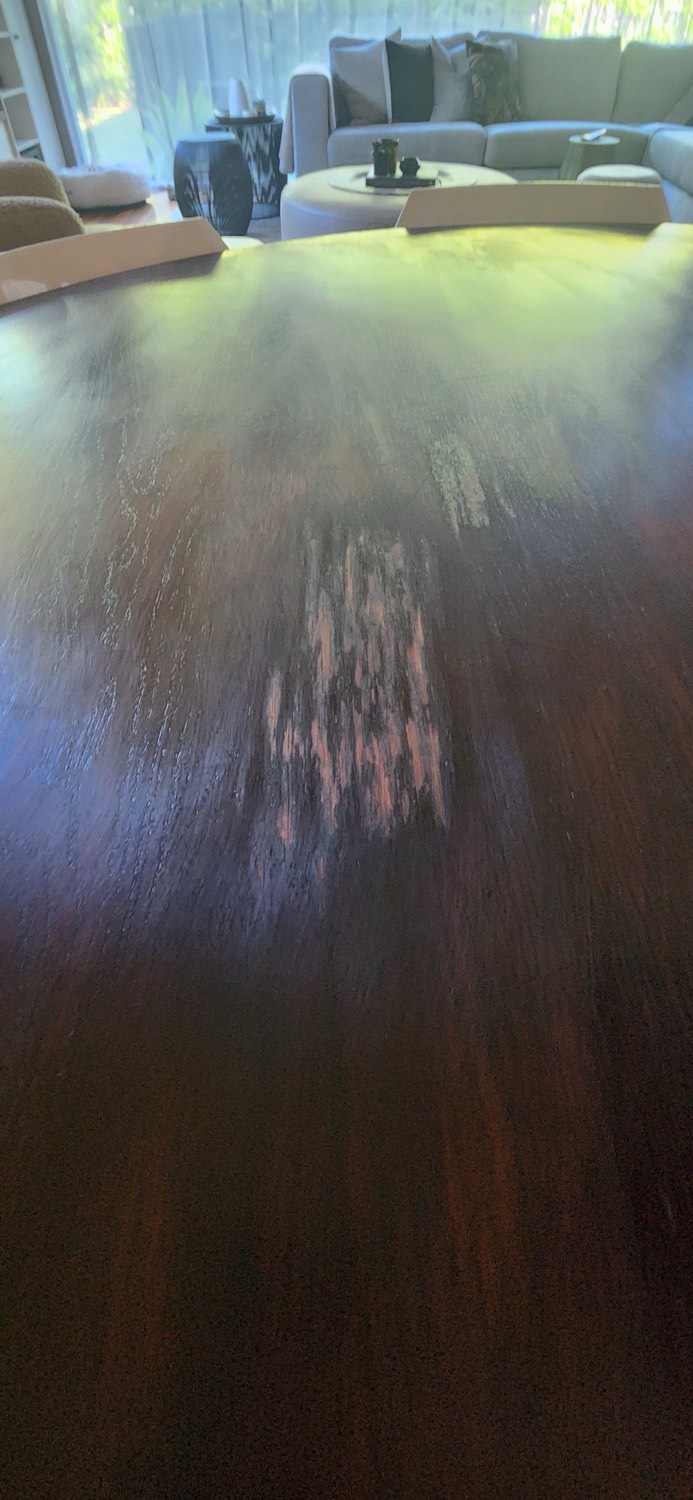
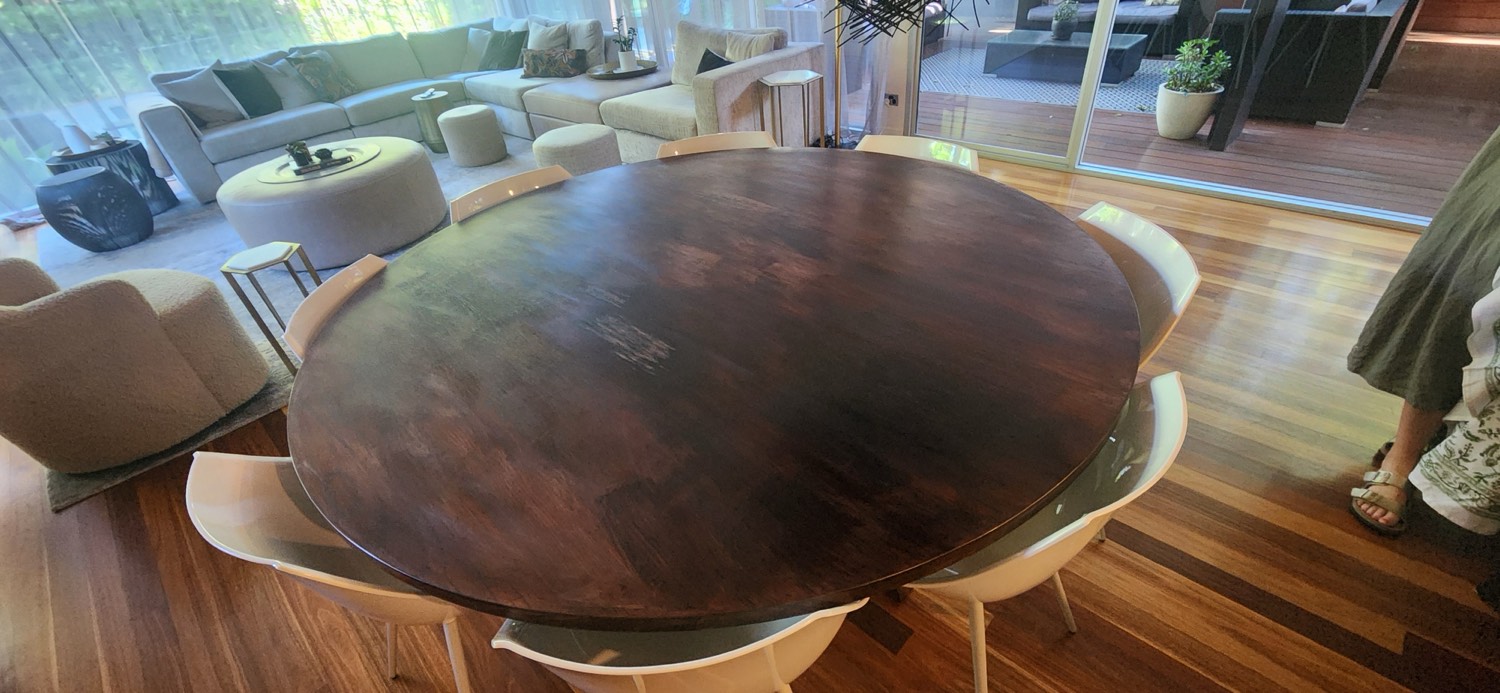
Nail polish remover had gone over the top at some point. Acetone does not mark a finish so much as dissolve it, and it had taken the surface back in patches and left the oak beneath it pale and open. Someone had then had a go at putting it right, which is usually where these stories go wrong, and the repair had dried in streaks sitting proud of everything around them. On top of that there was water damage, the milky bloom that gets in under a finish and will not polish out because the problem is underneath, not on the surface.
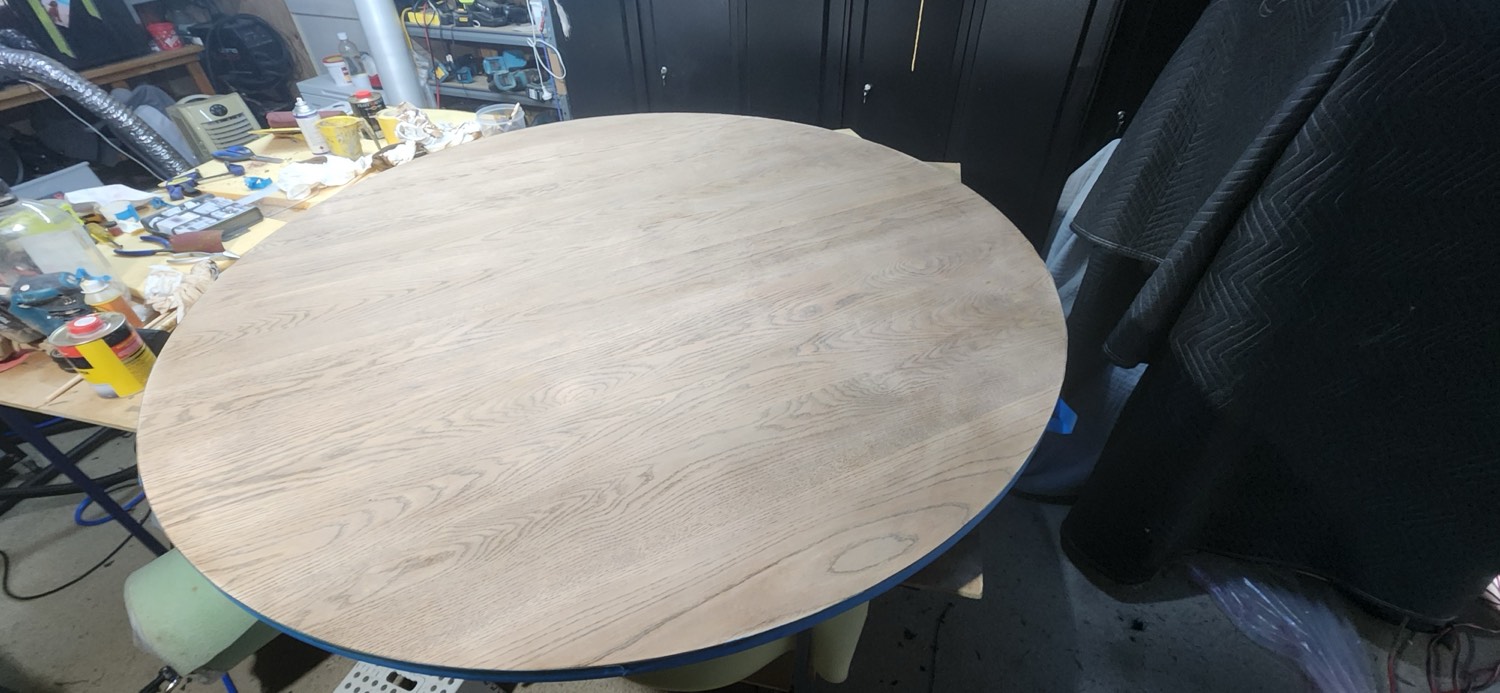
The honest answer at that point is that there is nothing to save on the surface. Patching would have meant blending a repair into a finish already failing everywhere else. So the table came back to the workshop and we took the top all the way off, stripping and sanding back through every previous coat until we were on clean bare oak and every mark, streak and cloudy patch was gone.
What came up underneath was worth the trip. Straight, even oak grain that had been buried under a dark old finish for years.
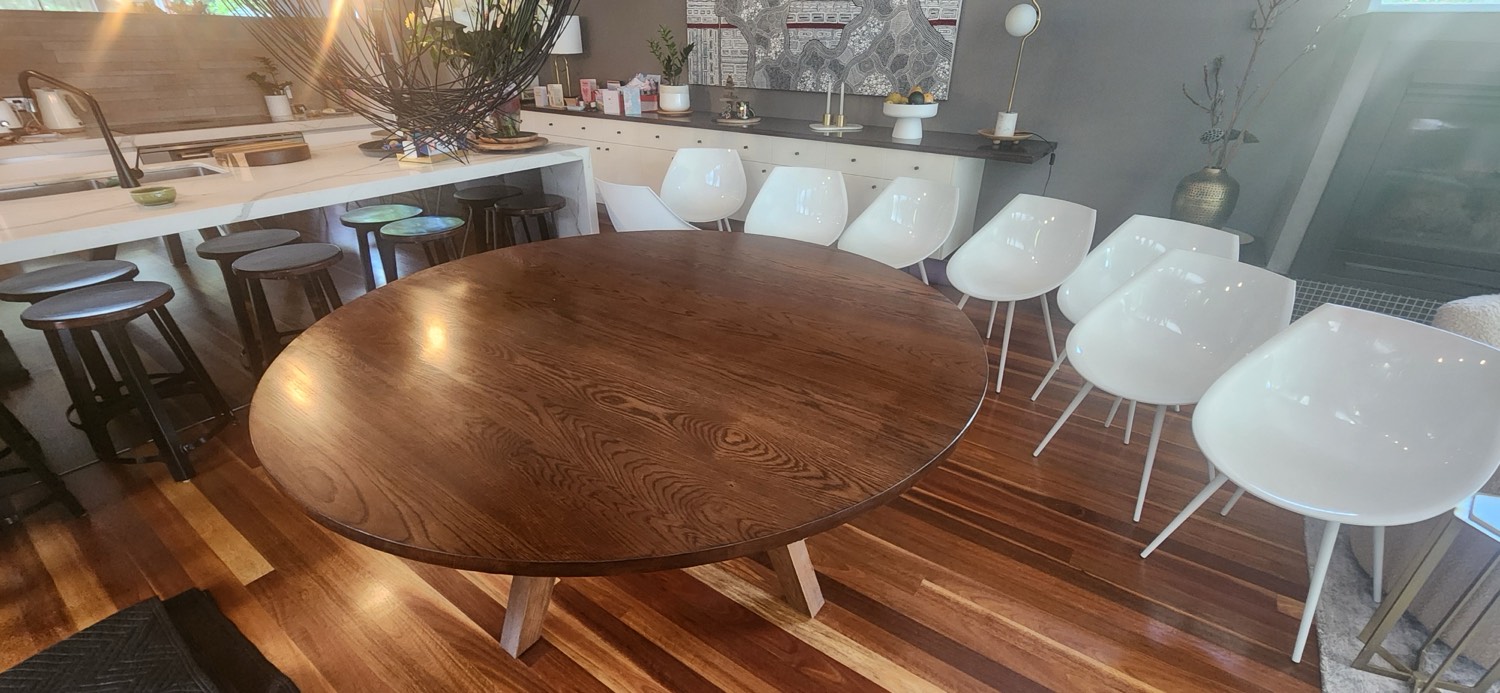
Then a decision that matters more than it sounds. The traditional answer is a hand-rubbed shellac, and it is beautiful, but shellac is exactly what acetone and a wet glass will destroy. This table is not an ornament. It is where a family eats every night. So we finished it in a water-based polyurethane instead, built up in coats, which holds its clarity, lets the oak grain show, and shrugs off the spills that killed the original finish.
The table was away about two weeks. Very little of that is labour. Each coat has to dry and harden properly before the next one goes on, and that waiting is not padding, it is the difference between a finish that lasts and one that stays soft and marks again inside a year. The right finish, properly cured, is the one that suits how the piece is actually used rather than the one that sounds the most traditional.
It went back into the same room it left.
The process
What we fix
The milky white bloom under the finish that will not polish out because it sits below the surface.
Pale open patches where the finish has been dissolved away and the bare timber is exposed.
Rings and clouding from hot dishes and cups left on the surface.
Streaked or patchy attempts that dried proud of the surrounding surface and made it worse.
Years of everyday use, cutlery, and dulled patches where the finish has worn through.
Uneven colour where part of the top has been bleached by a window.
Table questions
Usually yes. The milky white bloom people see is moisture trapped underneath the finish rather than damage to the timber itself. Light cases can sometimes be drawn out, but where it has spread or sat for a long time the honest fix is to strip the finish off and refinish, because the problem is under the surface and no amount of polishing the top will reach it.
Yes. Acetone dissolves a finish rather than scratching it, so it leaves pale open patches where the coating has gone and the bare timber is exposed. It cannot be buffed out because there is nothing left to buff. The table needs stripping and refinishing, which is exactly what we did on the oak table shown on this page.
Almost always, and it is a common reason people call us. A failed repair usually dries in streaks or patches that sit proud of the surface around them. Because we strip the whole top back to bare timber rather than patching, the earlier attempt disappears with everything else.
Around two weeks for a full strip and refinish. Most of that is not labour, it is waiting. Each coat has to dry and harden properly before the next one goes on, and rushing that is what causes a finish to stay soft and mark again within months. We will give you a firm timeframe with the quote.
It depends on how the table is used. Traditional shellac and French polish look beautiful but are damaged by alcohol, heat and exactly the sort of spills a family table sees. On a table in daily use we usually recommend a water-based polyurethane built up in coats, which keeps the timber looking natural and clear while standing up to real life. We will talk it through before we start.
If the table is solid timber, nearly always. Solid oak, blackwood and similar tables are built far better than most of what you can buy new at the same price, and the damage is almost always in the finish rather than the timber. Restoring keeps the piece and the size that already suits your room.
Yes. We collect from your home, do the work at our Eltham North workshop and deliver it back. Large round and extension tables are no problem, we plan the access when we book.
Yes, we restore dining tables across all of Melbourne. The oak table on this page came from an Eaglemont home, and we work throughout the north east and inner east as well as the wider metro area.
Related
It depends almost entirely on the finish and the damage. Lifting a dulled surface back up is one job. Dealing with water rings, heat marks, a lifting veneer or a top that has been stripped badly by someone else is another. Loose or broken joints in the base are quoted separately from the top, because they are separate work. Send photos taken in daylight, straight on and at a low angle so we can read the surface, and we will quote it in writing at no cost.
Yes, and it is the sensible way to do it. If the chairs are being recovered while the table is with us, we can work to the timber finish rather than guessing at it later, which matters when you are choosing a fabric or leather that has to sit next to a restored top every day. We bring samples to you and look at them against the actual timber rather than under workshop light. If only a few chairs in the set are damaged we match the rest so the set reads as one again.
Local to Eaglemont, send a photo of your sofa, chairs or piece and we'll come back with a rough price. Pickup & delivery by arrangement.
Send a photo of the top and tell us what happened. We'll come back with a straight quote, no obligation, no pressure.
Send a photo for a quote Call 0425 832 619